5 Signs You've Outgrown DIY Systems
Remember when your homegrown spreadsheet solution felt clever? When manually copying data between systems seemed fine because "it only takes a minute"?
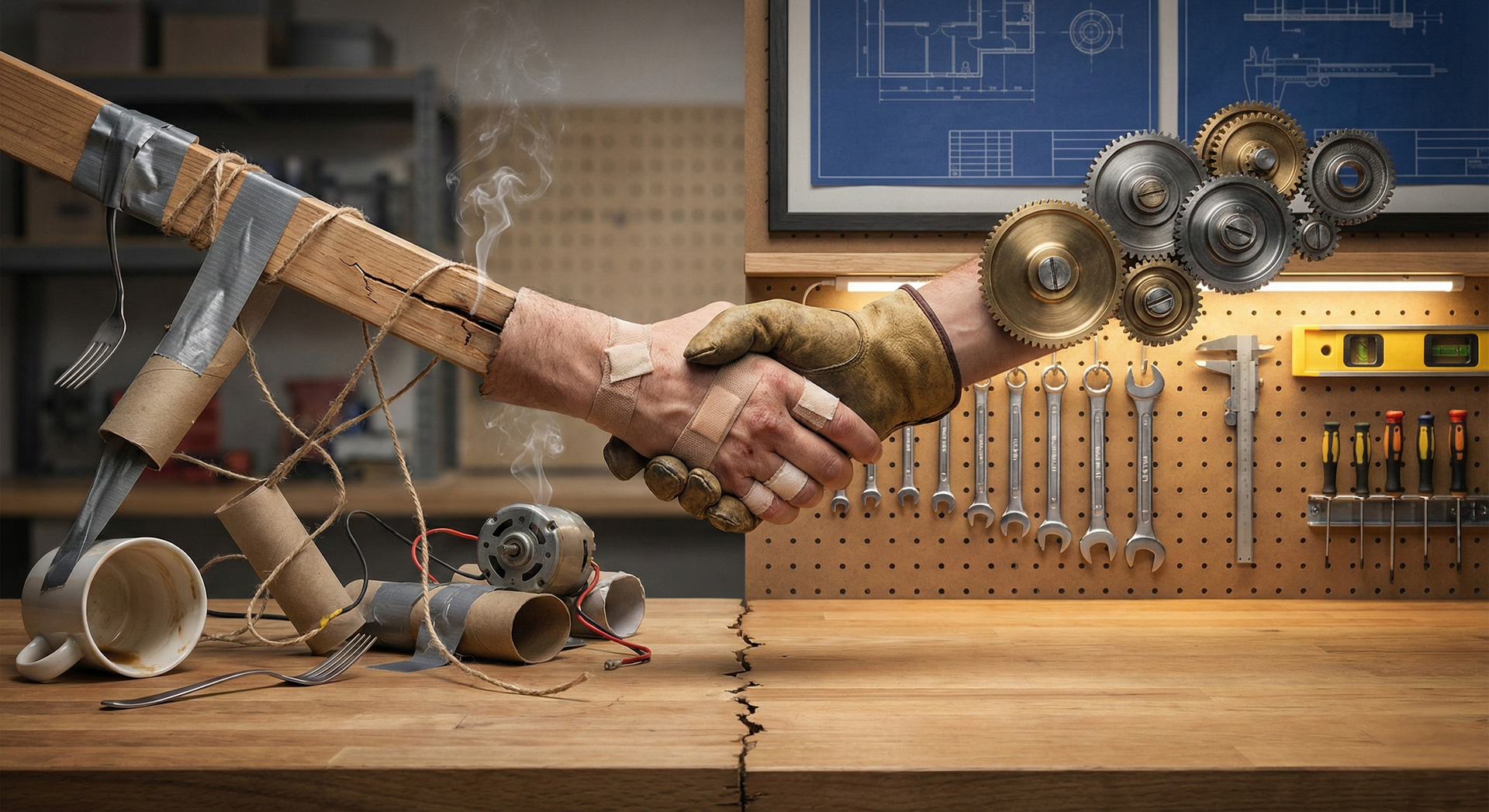
That scrappy, do-it-yourself approach works brilliantly in the early days. But there comes a point where the very systems that got you started become the chains holding you back.
The tricky part? The shift happens gradually. You don't wake up one morning to find your processes completely broken. Instead, inefficiencies compound quietly until you're drowning in busywork that feels urgent but isn't moving the business forward.
Here are five telltale signs that your patchwork systems have become a problem worth solving.
1. Routine Tasks Are Eating Your Week
You open your laptop Monday morning with ambitious plans. By Friday afternoon, you've barely touched your strategic work because "routine" tasks consumed 15, 20, even 30 hours of your week.
Generating reports manually. Copying information from one system to another. Following up on the same types of requests over and over. These tasks feel productive in the moment, you're checking boxes, after all, but they're stealing time from activities that actually grow your business.
The red flag: If you're regularly working late just to handle administrative tasks, or if you find yourself thinking "I never have time for the important stuff," your systems are failing you. The work you're doing should be handled by automation, not by you staying until 8 PM.
2. Human Error Has Become Part of Your Process
A client receives an invoice with the wrong amount. A shipment goes to an old address because someone forgot to update the record. A proposal includes outdated pricing because the spreadsheet wasn't synced with the latest changes.
When you're manually entering data, copying information between systems, or relying on ad-hoc processes that live in people's heads, mistakes are inevitable. We're human. We get tired, distracted, interrupted.
The red flag: If errors are happening frequently enough that you've built in "checking" steps, or if you're spending significant time on rework and damage control, your manual processes have become a liability. Client frustration and lost revenue are expensive ways to learn this lesson.
3. Your Team Is Stuck in Groundhog Day
Your talented people spend their days on soul-crushing repetition. Formatting the same type of document for the hundredth time. Manually updating records with information that already exists elsewhere in your systems. Sending nearly identical emails with minor variations.
In addition to being inefficient, it's also a morale killer. You hired smart, capable people to contribute their expertise and creativity, not to be human copy-paste machines.
The red flag: When team members can describe their work as "doing the same thing over and over," or when they express frustration about spending entire days on tasks that feel mechanical, you're wasting human potential on problems that automation solves elegantly.
4. Your Tools Don't Talk to Each Other
Customer information lives in your CRM. Financial data sits in your accounting software. Project details are scattered across email threads and shared drives. Your scheduling tool doesn't know about your project management system, which doesn't connect to your invoicing platform.
You've assembled a collection of perfectly good tools, but they're islands. Getting a complete picture of anything requires detective work across multiple applications, opening browser tabs like a madman, and hoping you haven't missed something important buried in an email from three weeks ago.
The red flag: If you hear yourself saying "let me check" followed by opening five different applications, or if creating a single report requires exporting data from multiple sources and manually combining it, you're living in data silos. The time wasted context-switching and cross-referencing adds up faster than you realize.
5. You're the Only Person Who Knows What's Happening
Someone asks about the status of a project, and all eyes turn to you. You're the human database, the walking knowledge repository, the only person who can answer questions about where things stand.
This might feel important, even flattering, but it's actually a bottleneck dressed up as job security. Your team can't make decisions or move work forward without interrupting you. Clients can't get simple status updates without you being available. Nothing progresses when you're out sick or on vacation.
The red flag: If your calendar is filled with "quick questions" and status check-ins, or if work grinds to a halt when you're unavailable, your lack of visibility is costing the business. Coordination shouldn't require you as the central nervous system.
The Cost of Staying Put
Here's what many business owners miss: these signs represent inconvenience and real costs that compound over time.
Every hour spent on manual tasks is an hour not spent on strategy, business development, or innovation. Every error that reaches a client damages your reputation. Every talented team member grinding through repetitive work is one step closer to burnout or departure. Every coordination breakdown means delayed decisions and missed opportunities.
The DIY systems that served you well at one stage become anchors at the next. Recognizing when you've outgrown them is acknowledging growth.
What Happens Next?
If you recognized your business in three or more of these signs, you're likely past the point where optimizing your current approach will help. Adding another spreadsheet or asking your team to "be more careful" treats symptoms, not causes.
Professional automation solutions exist precisely to solve these problems. They eliminate repetitive manual work, connect your disconnected tools, reduce errors through systematic processes, and create the visibility that allows teams to coordinate without constant intervention.
The question isn't whether to evolve your systems. It's whether you'll do it proactively, when you have the energy and resources to do it well, or reactively, after a costly mistake or the departure of a frustrated key employee forces your hand.
Your DIY systems got you here. But here isn't where you're trying to go.
© Virtual Rani2025. The information contained herein is provided for information purposes only; the contents are not intended to amount to advice and you should not rely on any of the contents herein. We disclaim, to the full extent permissible by law, all liability and responsibility arising from any reliance placed on any of the contents herein.